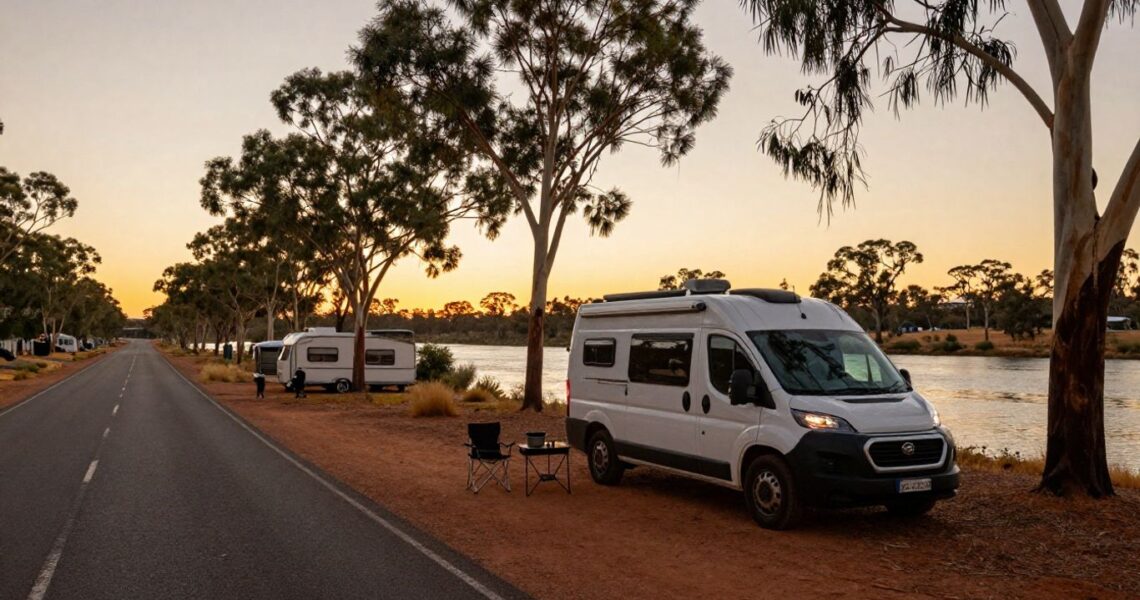
Free camps vs caravan parks: Which option is right for your next trip?
September 17, 2026Key Takeaways
Free camps and caravan parks suit different kinds of travel, and neither is automatically the better choice. Your vehicle, comfort needs, route, budget, and appetite for planning should guide the decision.
- Free camps can reduce nightly costs and place you closer to quiet natural surroundings.
- Caravan parks generally provide more facilities, services, and predictable access.
- Check local rules, road conditions, weather, and site limitations before you arrive.
- A mixed itinerary can balance savings with showers, laundry, power, and a reliable base.
- Keep a backup option available in case a site is full, unsuitable, or inaccessible.
Understanding the difference between free camps and caravan parks
The choice between free camps and caravan parks is really a choice between different kinds of convenience. Free camping often means greater independence and fewer facilities, while a caravan park usually offers a more managed stay with shared amenities. As you plan a slow loop around Australia, consider how much support you want each night rather than treating the nightly price as the only deciding factor. The right option may change from one part of the trip to the next.
What free camping typically includes
A free camp may be a basic public camping area, a roadside rest area, or a permitted site on public land. You might have a place to park and little else, so your vehicle needs to carry the water, power, food storage, and waste arrangements you will use. Some locations have toilets, picnic tables, fire rings, or bins, but those facilities cannot be assumed from the word “free”. Check the current local rules and any maximum stay before settling in.
Free camping also brings a stronger responsibility to leave the area clean and respect other visitors. If there is no rubbish collection, take your waste with you; if fires are allowed, follow local restrictions carefully. A quiet site can be rewarding, but it works best when you are comfortable being self-sufficient.
What caravan parks usually offer
Caravan parks generally provide allocated sites, shared amenities, and a clearer arrival process. Depending on the park, you may find powered sites, bathrooms, laundry facilities, a camp kitchen, play areas, or a reception where you can ask about local conditions. Some parks are simple and peaceful, while others are busy places designed for families and longer stays.
You will usually pay for this structure, but the fee can buy more than a patch of ground. It may give you access to showers, power, waste disposal, and a convenient base near shops or attractions. Before booking, check exactly what is included and whether extra charges apply to additional people, vehicles, pets, or certain facilities.
How rules and amenities vary by location
There is no single standard for either type of campsite. A free site may have excellent access and basic toilets, while another may have no services at all; a caravan park may offer a full range of facilities, or only the essentials. Rules can also cover pets, generators, fires, length of stay, quiet hours, and the kind of vehicle permitted.
Read current information rather than relying on an old description or a vague memory from another traveller. Local councils, land managers, park operators, and roadside signs may all provide useful guidance. If information conflicts, treat the most recent on-site instruction as the one to follow.
Why the best choice depends on your travel style
Some nights you may want a secluded view and a simple routine. Other nights, a hot shower, washing machine, and reliable power can make the next stretch of driving much easier. Your decision should reflect how your setup works, how often you need to restock, and whether you are travelling alone, as a couple, or with children.
A flexible approach is often more useful than choosing one campsite type for the entire journey. Free camps can create memorable stops between towns, while caravan parks can give you a practical base when you need to reset.
Comparing costs and overall value
The word “free” describes the site fee, not necessarily the complete cost of staying there. You still need to consider fuel, water, food, waste disposal, phone coverage, laundry, and the wear created by difficult access roads. Caravan parks have a visible nightly charge, which can make them easier to compare even when the total value depends on what you use. Look at the cost of the whole stop, not just the line on a booking page.
Typical expenses at free camps
At a free camp, your main direct cost may be the travel required to reach it. A remote location can mean extra fuel, a longer route to groceries, or a return trip to a dump point. If you need a shower, laundry, drinking water, or a meal away from your vehicle, those needs may create additional stops and expenses.
There may also be a small donation, permit requirement, or parking charge at some sites described as low-cost or free. Carrying enough supplies can keep the stay affordable, but do not stretch your water or waste capacity beyond what your setup can safely manage. A free site is good value when it fits your route and equipment, not simply because no booking fee appears.
Nightly rates and extra fees at caravan parks
Caravan parks normally show a nightly rate, but the final price can depend on the site type and the people travelling with you. Powered and unpowered sites may be priced differently, and some parks charge separately for extra guests, pets, vehicles, or selected amenities. Ask for the complete cost before confirming a stay if the listing is not clear.
The benefit of paying is often the concentration of services in one place. A park with showers, laundry, kitchen facilities, waste disposal, and a convenient location may reduce the separate costs and detours you would face elsewhere. It can also save time, which matters when you are moving slowly but still want to see the surrounding area.
Hidden costs to include in your budget
A useful comparison includes the expenses that are easy to overlook. A remote free camp can require extra fuel, while a cheaper caravan park outside town may lead to more driving for every errand. You may also need to account for laundry, paid showers, drinking water, replacement gas, campsite fees, and the occasional night in a more comfortable location after a tiring stretch.
Think through the likely needs of each stop before you choose. This simple check can prevent a low nightly price from becoming inconvenient once you add transport and services.
| Cost to consider | Free camp | Caravan park |
|---|---|---|
| Site fee | Often nil, but local charges may apply | Usually a published nightly rate |
| Power | Usually supplied by your own setup | May be included with a powered site |
| Water and waste | You may need to carry and manage both | Services may be available on site |
| Laundry and showers | Often unavailable or found elsewhere | Commonly available, sometimes for a fee |
The table is only a starting point because facilities vary widely. Use it to identify questions for the specific site, then compare the likely total for the night rather than assuming one category will always cost less.
When paying more can save money
A caravan park can be better value when it prevents a long detour or lets you replenish several supplies at once. It may also save money by giving you somewhere to wash clothes, dispose of waste, and recharge equipment without arranging separate stops. For a longer stay, having a stable base can make day trips simpler and reduce the temptation to move on before you are ready.
Paying for a site is not a failure to travel economically. It is a practical choice when the facilities, location, or rest you receive are worth the fee for that particular part of the journey.
Evaluating facilities and comfort
Facilities shape how much work your camping routine requires. A well-equipped vehicle can make a basic site feel comfortable, but even a capable setup has limits when water tanks, batteries, and waste storage need attention. Caravan parks usually bring more shared services, although the standard and cleanliness can differ. Decide which facilities genuinely matter to you rather than choosing a park based on a long list of features.
Toilets, showers, and drinking water
Toilets are not guaranteed at every free camp, and available facilities may be basic or closed for maintenance. You should know how your setup handles the absence of a toilet and carry drinking water from a reliable source rather than assuming a tap is safe. Water marked for other purposes should not be treated as drinking water.
Caravan parks generally make showers and toilets easier to access, which can be especially valuable after a hot day, a long drive, or time outdoors. Check whether the amenities are shared, accessible at all hours, and included in the site price. A quick review of the facilities can help you avoid an uncomfortable surprise.
Electricity, waste disposal, and laundry
Free camping usually relies on your own battery, solar setup, gas, and water storage. You also need a sensible plan for grey water, toilet waste, and rubbish, following the rules that apply to the location. If your supplies are running low, arrange a legal disposal or refill point before the situation becomes urgent.
A caravan park may provide powered sites, dump points, laundry, and other practical services. These facilities can make a difference during a longer loop, especially when several days of self-sufficiency have left you ready for a reset. Confirm the connection requirements and whether the facilities are operating during your stay.
Wi-Fi, kitchens, and family-friendly amenities
Some travellers barely notice the absence of Wi-Fi, while others need a reliable connection for work, bookings, or keeping in touch. Free camps may offer little or no connectivity, and even caravan park Wi-Fi can vary by location and demand. Treat internet access as something to verify rather than a guaranteed feature.
Shared kitchens, barbecue areas, playgrounds, recreation spaces, and swimming pools can make a caravan park appealing for families or longer visits. They can also make a park busier and less private. Consider whether the amenity will improve your stay or simply add another feature you will not use.
Choosing between convenience and self-sufficiency
Self-sufficiency gives you freedom to stay in quieter places and change plans with less notice. Convenience reduces the daily jobs that compete with sightseeing, particularly when you need to clean up, charge devices, or restock. Neither approach is more authentic; they simply ask different things of you.
Before choosing, ask how much effort you want to spend managing camp systems that day. Comfort is part of value, especially when a good night’s rest helps you drive safely and enjoy the next stop.
Considering location, access, and surroundings
The setting can be the strongest reason to choose a free camp or a caravan park. A simple site beside a river, forest, or open plain may give you the atmosphere you hoped for, while a park near town may make supplies and sightseeing far easier. Distance on a map does not tell you everything about access, road quality, turning space, or weather. Read the route as carefully as you read the campsite description.
Remote landscapes and natural settings at free camps
Free camps are often attractive because they place you away from built-up areas and close to the landscape. You may wake beside a quiet reserve, watch changing light across open country, or spend an evening without the sounds of a busy town. Those experiences can be the reason you chose a road trip in the first place.
Remote settings require restraint and preparation. Keep noise low, follow fire and access rules, protect wildlife, and leave the area as you found it. A beautiful place may have limited emergency access and no nearby shop, so enjoy the isolation without treating it casually.
Convenient locations near towns and attractions
Caravan parks are often useful when you want to explore a town, visit a national attraction, or stay close to shops and services. Leaving your vehicle in one place for a few nights can be easier than packing up every morning. It also gives you a known base when the surrounding area has more to see than one day allows.
Convenience can come with road noise, tighter sites, or a stronger sense of activity. Look at the location in relation to the places you actually want to visit, and check whether local traffic or seasonal demand could affect the experience.
Road conditions, vehicle access, and parking space
A campsite is only suitable if you can reach it and position your vehicle safely. Check whether the final approach is sealed, gravel, narrow, steep, or suitable only for certain vehicles. Think about turning space, overhead branches, soft ground, and the length of your caravan or motorhome before committing.
If you are towing, avoid treating a short distance as proof of an easy route. A rough or narrow track can take longer than expected and may not provide a safe place to turn around. When details are uncertain, choose the more conservative option or ask the land manager for current advice.
How weather can affect campsite accessibility
Rain can change a firm road into a slippery track, while heat can increase fire restrictions and place extra pressure on your water supply. Wind may make exposed camps uncomfortable, and flooding can affect low-lying sites even when the weather near you seems mild. Conditions can shift between the time you plan the route and the time you arrive.
Check forecasts and local warnings close to departure, then consider how your vehicle would cope if conditions worsened. A campsite that is pleasant in dry weather may be unsuitable after rain, so keep an alternative within reach.
Weighing safety, privacy, and peace of mind
Safety is not exclusive to one kind of campsite. A busy caravan park may provide staff and clearer site boundaries, while a quiet free camp may offer privacy but fewer people nearby if something goes wrong. Your own preparation matters in both settings. Consider access, weather, fire conditions, vehicle security, and how easily you could leave if plans changed.
Checking site conditions before you arrive
Read recent information where possible and look for details about road access, ground conditions, closures, and maximum stays. Satellite images can help you understand the general setting, but they cannot replace current local information. If the site has no recent reports or the directions are vague, allow extra time and keep your expectations modest.
Arrive with enough daylight to inspect the area before parking. Look for a level, stable position, clear exit route, and sensible distance from hazards such as unstable trees, flood-prone ground, or active roads. A few minutes of checking can prevent a difficult night.
Understanding security at different campsite types
A caravan park may have reception staff, other guests, lighting, and defined entry points, although those features do not remove the need to secure your belongings. Free camps generally provide less oversight and more open access. You may prefer that privacy, but you should be comfortable with the extra responsibility.
Keep valuables out of sight, lock the vehicle when you leave, and avoid sharing more personal information than necessary with people you have just met. Trust your instincts about a site; if it feels unsuitable, you can move on rather than trying to justify staying.
Managing wildlife, fire risks, and changing weather
Wildlife is part of camping, but food and rubbish should be stored so animals are not encouraged to approach. Follow local fire rules, check whether fires are permitted, and extinguish any allowed fire completely. Never assume that a familiar routine is acceptable during a period of restricted conditions.
Weather preparation is just as practical. Secure awnings and loose equipment before strong winds arrive, keep footwear and essentials dry during rain, and make sure you know where you would go if the site became unsafe. Small preparations are easier than hurried repairs in the dark.
When a staffed park provides extra reassurance
A staffed caravan park can be reassuring when you arrive late, need local information, or are travelling with children or someone who needs easier access to facilities. Staff may also explain site rules, weather concerns, and nearby services. That support is a legitimate part of the fee, even when you do not use every amenity.
You may also prefer a managed site after a demanding drive or when you are unfamiliar with the region. A clear check-in process and nearby people can make it easier to settle in and plan the following day.
Choosing the right option for your camping setup
Your vehicle and daily routine should have a strong influence on the decision. A small camper with modest storage may suit a park when it needs water, power, or laundry, while a well-equipped motorhome may comfortably spend several nights at a basic site. The same campsite can feel spacious to one traveller and awkward to another. Match the location to what your setup can genuinely handle.
What solo travellers and couples may prefer
Solo travellers and couples often have more flexibility about where and when they stop. A free camp can make it easier to follow a scenic route, pause for a quiet evening, or keep costs down between larger towns. You may also appreciate the privacy of a less structured site.
A caravan park can still be the better choice after a long driving day or when you want a secure base for exploring. If you are travelling alone, think honestly about how comfortable you are managing water, waste, access, and unexpected changes without nearby assistance.
Considerations for families with children
Families may value a caravan park’s toilets, showers, laundry, kitchen, and play areas. Having room for children to move around, and services close at hand, can make the daily rhythm easier. It can also be reassuring to have a clear place to return to after a day out.
Free camps can work well for families who enjoy outdoor space and already have a suitable routine. Check for hazards, shade, water access, and a safe area away from traffic, and be clear about supervision. A site that is peaceful for adults may not be practical for young children.
Matching the site to your RV or caravan
Check your vehicle’s length, height, turning circle, ground clearance, and power needs before selecting a site. A spacious-looking area may still have a difficult entrance or a tree that prevents you from positioning safely. If you need a powered connection, confirm the site type rather than assuming one will be available on arrival.
A caravan park can offer more predictable pitches, but not every site suits every rig. Ask about access and site dimensions when booking, especially if you are travelling with a larger caravan or towing setup. At a free camp, arrive early enough to choose a position that leaves a clear exit.
Planning for pets, accessibility, and longer stays
Pet rules vary considerably, from welcome conditions to complete restrictions. Check whether animals must remain on a lead, whether they can enter shared areas, and whether local wildlife makes a site unsuitable. Accessibility also deserves a direct question: look for firm paths, suitable bathroom access, and a parking position that works for your needs.
Longer stays require more than a pleasant view. Consider water, waste, food storage, washing clothes, connectivity, and the maximum permitted stay. A caravan park may simplify these needs, while a free camp may be worthwhile if your equipment and the local rules support a longer visit.
Planning a trip that combines both options
You do not have to choose one style for the whole journey. A mixed plan can give you quiet nights between towns and practical stays when you need supplies, facilities, or a break from managing everything yourself. This is often how a slower road trip finds its rhythm. Build the route around what each type of campsite does well.
Using free camps to reduce travel costs
Free camps can lower the cost of stops between paid stays, especially when they are close to your route and your vehicle is prepared for them. Use them deliberately rather than adding a remote detour simply to avoid a nightly fee. The fuel and time involved may cancel out the saving.
Before leaving a caravan park, replenish what you need and confirm the next site’s facilities. A little preparation makes the free-camp night more comfortable and reduces the chance that you will need to turn around for supplies.
Booking caravan parks during busy periods
Caravan parks can fill quickly during school holidays, long weekends, festivals, and popular seasonal events. If you need a powered site, accessible amenities, or a particular location, booking earlier gives you more choice. Confirm the arrival time, cancellation conditions, and any requirements for your vehicle or pet.
You do not need to book every night months ahead if your route is flexible. Reserve the important bases first, then leave room for free camps and weather-related changes between them.
Building backup plans for full or unsuitable sites
A backup plan is especially useful when a free camp has limited space or a park is fully booked. Identify another legal site, a nearby town with services, or a place where you can safely pause while deciding what to do next. Do not rely on reaching a particular campsite after dark if the route or conditions are uncertain.
Keep your options practical by checking access, opening periods, and rules before you need them. A short list of realistic alternatives is more useful than a long list of locations you have not verified.
Deciding when to switch from one option to the other
Switch to a caravan park when your water, power, laundry, waste, or energy reserves are becoming a concern. Choose a free camp when you are prepared, the conditions are suitable, and the setting adds something worthwhile to the journey. You can also change plans simply because you want a quieter night or a more sociable one.
The best itineraries leave room for that judgement. Check the next stop each day, listen to what your vehicle and supplies are telling you, and treat comfort as a practical part of travelling well.
Conclusion
Free camps vs caravan parks is not a contest with one universal winner. Free camps can bring quiet surroundings and lower site costs, while caravan parks can provide facilities, access, and reassurance when you need them. Compare the whole stay, check the local conditions, and plan a route that lets you use both options on their own terms.