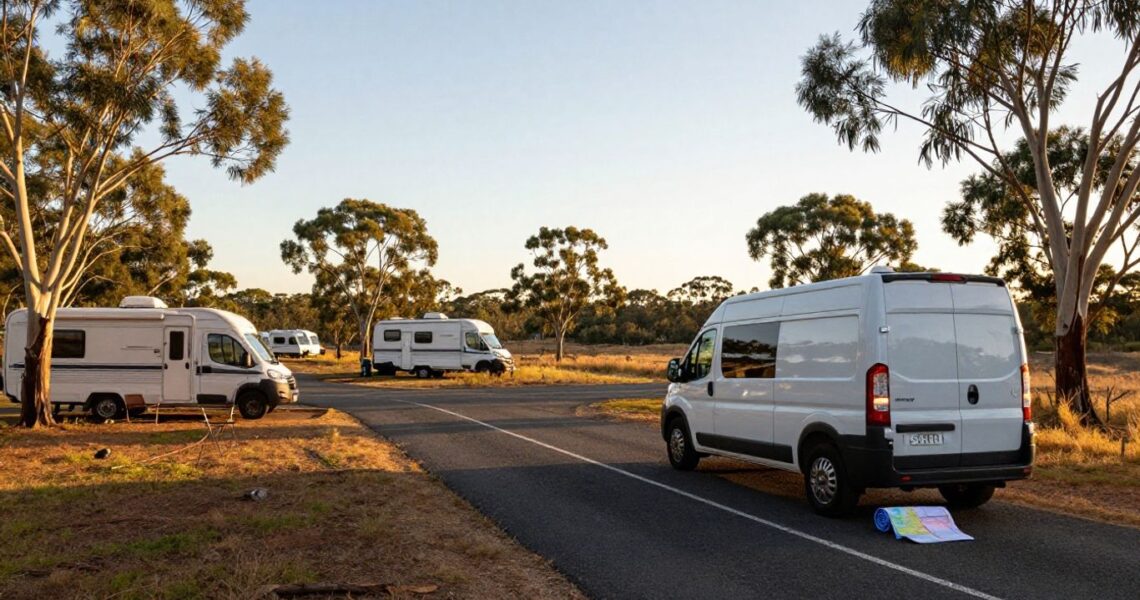
Free camps vs caravan parks: Which option is right for your next road trip?
September 17, 2026Key Takeaways
Choosing between free camps and caravan parks depends on more than the nightly price. Your vehicle, route, equipment, comfort needs, and willingness to manage uncertainty all matter.
- Free camps can offer quiet surroundings and lower accommodation costs, but usually require more self-sufficiency.
- Caravan parks generally provide easier access to facilities, services, and predictable sites.
- The cheapest overnight option may cost more if it adds a long detour or extra fuel use.
- Local rules, road conditions, weather, and wildlife should shape your decision.
- A flexible trip often works best when you combine free camps with occasional caravan park stays.
What free camps and caravan parks offer
The choice between free camps and caravan parks often comes down to the kind of night you want to have. Free camps may put you closer to nature and give you more space, while caravan parks tend to make daily routines simpler. Neither option is automatically better. The right fit depends on what you carry, where you are going, and how much convenience you expect.
Typical amenities and facilities
Free camps can range from a basic clearing or rest area to a site with a picnic table, fire ring, toilet, or rubbish bins. Facilities vary widely, and some places have no services at all. Caravan parks are more likely to offer marked sites, shared bathrooms, powered spots, laundry facilities, and areas for cooking or relaxing. You should check the current listing rather than assume a familiar type of campsite will provide a particular amenity.
A short list of the facilities that can change your experience includes:
- Toilets and showers for an easier morning routine.
- Drinking water for cooking, cleaning, and refilling tanks.
- Power connections for appliances, batteries, and climate control.
- Laundry, waste disposal, and rubbish facilities for longer stays.
These basics can matter more than a scenic view after several days on the road. If you are self-contained and comfortable conserving supplies, a simple free camp may be all you need. If not, a caravan park can remove several small chores from the day.
Privacy, space, and campsite atmosphere
Free camps often feel less structured, with more variation in how close you are to other travellers. You may find a peaceful spot beside bushland, water, or open country, though popular locations can still become busy. Caravan parks usually have defined sites and shared spaces, so there may be less privacy but more social contact. Some travelers enjoy the chance to meet others, while you may prefer a quieter setting after a long drive.
The atmosphere also changes with the time of year and local events. A place that feels spacious on a weekday may be crowded on a holiday weekend. Consider whether you want conversation and shared facilities or the simple rhythm of making dinner beside your own vehicle.
Booking requirements and availability
Many free camps do not use a booking system, but that does not mean you are guaranteed a place. Some have limited spaces, seasonal closures, stay limits, or local restrictions. Caravan parks commonly accept bookings, which can be useful when you are travelling during school holidays or need to arrive late. The trade-off is that you may need to commit to a date and arrival time.
When your plans are loose, an unbooked site can make the trip feel more open. When you have a ferry, tour, family gathering, or other fixed appointment, a reserved caravan park may reduce one source of uncertainty. Always confirm the arrival rules before relying on an assumed after-hours check-in.
Differences for tents, vans, and RVs
Your accommodation setup changes what counts as a suitable site. A tent may need level ground, shelter, and access to toilets, while a van may be more comfortable in a simple parking area. Larger RVs and caravans need enough clearance, turning room, and road access, as well as a place to manage water and waste.
Think beyond whether you can physically arrive. A narrow track, low branch, soft shoulder, or steep exit can make a site unsuitable for a larger rig. Caravan parks usually provide more predictable site dimensions, but you should still check the length and access requirements before booking.
Comparing the total cost
A free campsite can reduce your accommodation bill, but the full cost of a stop includes more than the site fee. Fuel, supplies, showers, laundry, road distance, and the value of your time can all affect the result. A paid site may be worthwhile if it helps you rest, resupply, or stay close to the next place on your route. Comparing the whole stop gives you a clearer answer than focusing on one price.
Nightly fees and hidden expenses
Free does not always mean costless. You may need to buy water, pay for a public shower, use a laundromat, or purchase a meal because cooking is difficult without power or a suitable surface. Some low-cost sites also involve a donation, permit, or local fee, so read the current conditions carefully.
Caravan parks make the main accommodation charge easier to see, though extras can still apply for additional people, pets, powered sites, or special facilities. Ask what is included before you commit. A clear total helps you compare a paid night with the practical cost of staying self-sufficient elsewhere.
Fuel, supplies, and travel distance
A remote free camp may be memorable, but reaching it can add kilometres and use supplies you would otherwise keep for the next leg. A caravan park near a town may cost more for the night while saving fuel and giving you a convenient place to refill, shop, or service the vehicle. Route planning is therefore part of accommodation planning.
You can compare the options with a simple view of the likely cost:
| Cost factor | Free camp | Caravan park |
|---|---|---|
| Site fee | Often none, though permits or donations may apply | Usually a set nightly charge |
| Fuel and detours | May be higher if the site is remote | May be lower when close to towns or main routes |
| Water and waste | Usually carried and managed independently | May be available on site, depending on facilities |
| Laundry and showers | Often requires an outside service or personal equipment | More likely to be available for an added or included cost |
This comparison does not make one option universally cheaper. It shows where the extra cost may appear, so you can make a choice based on your actual route and equipment rather than the advertised nightly fee alone.
When paid amenities justify the price
A paid site can earn its place in your plans when you need a proper reset. After several nights without a shower or laundry, access to those facilities may make the next day easier. Power can also be useful when your batteries need attention or when weather makes outdoor routines unpleasant.
The value is personal. A couple with a well-equipped vehicle may need very little, while a family, first-time camper, or traveler with limited storage may benefit from a reliable base. If the site saves a long detour or lets you stay near an important destination, the higher nightly price may be sensible.
Ways to make either option more budget-friendly
You can manage costs without treating every night as a strict contest between free and paid. Use free camps when they sit naturally along your route, and choose a caravan park when its facilities replace several separate expenses. Travelling outside peak periods may also improve availability and reduce pressure to accept the first option.
Plan meals around what you already carry, keep water and waste systems in working order, and avoid driving well beyond your intended route simply to find a free site. Small decisions made before departure can protect both your budget and your energy.
Understanding comfort and convenience
Comfort is not only about mattresses and hot showers. It also includes how quickly you can settle in, whether you can keep devices charged, and how much effort basic tasks require. Free camps may suit you when independence is part of the appeal. Caravan parks can be a welcome pause when you want routine, services, and fewer decisions at the end of the day.
Access to showers, bathrooms, and laundry
At a free camp, you may need to rely on your vehicle’s facilities, a portable setup, or services in the nearest town. That can work well if you have planned your water use and know where your next shower will be. It becomes less convenient when the weather turns cold or wet, or when several people need to use limited supplies.
Caravan parks commonly group bathrooms, showers, and laundry in one place, although the standard and cleanliness can differ. Read recent information where possible and check whether facilities are shared, accessible at all hours, or subject to an extra charge. A little research can prevent an unpleasant surprise.
Electricity, water, and waste disposal
Power and water are practical dividing lines between many free camps and caravan parks. At a free site, you may need charged batteries, solar equipment, stored water, and a plan for grey water and rubbish. Caravan parks may provide powered sites, taps, dump points, or rubbish facilities, but availability still varies.
Before choosing a site, work out how long your supplies will last. You should also know how your vehicle handles waste and where it can be disposed of responsibly. A realistic supplies check is more useful than assuming you will find services when you arrive.
Wi-Fi, cell service, and entertainment
Remote sites can have weak or absent cell service, which may be peaceful but can make navigation, weather checks, and contact with others more difficult. Caravan parks near towns may have better coverage, though you should not assume that every park provides reliable Wi-Fi. Entertainment is often simple in both settings: reading, walking, cooking, and talking.
If you need to work while travelling, confirm coverage for the exact area and have maps or key information available offline. If you are travelling for a digital break, limited service may be one of the reasons you choose a free camp.
How setup time affects your trip
A free camp can be quick to use when you are travelling in a self-contained van and only need to park, secure your belongings, and prepare dinner. It can take longer when you need to level a vehicle, arrange a tent, set up water, or create a cooking area. Caravan parks may involve check-in and site rules, but a marked space and nearby facilities can simplify the rest.
Think about your arrival time and energy. A beautiful site that requires a complicated setup may feel less appealing after a full day behind the wheel. Sometimes convenience is not a luxury; it is what allows you to enjoy the following morning.
Staying safe and following the rules
A good campsite choice respects local rules, the environment, and your own limits. Free sites can be less supervised, while caravan parks usually have an operator or manager who can explain site conditions. Neither setting removes the need to prepare. Rules and risks can change between regions, seasons, and individual locations.
Checking local camping regulations
Do not assume that an empty roadside area or attractive piece of land is legal for overnight camping. Look for current information from the relevant land manager, council, park authority, or site operator. Check whether permits, booking systems, fire restrictions, maximum stays, or vehicle limits apply.
Signs may be easy to miss, especially when you arrive late. If the rules are unclear, choose a confirmed site rather than relying on what another traveler did previously. Following local conditions helps keep access open for future visitors.
Evaluating road access and site conditions
A map can show where a site is, but it may not describe the final approach accurately. Rain can change an unsealed road, tree branches can limit clearance, and a firm-looking shoulder can become soft after traffic or weather. Consider daylight, turning space, road width, and the likely condition of the exit before you commit.
For a larger vehicle, inspect the route with extra care and avoid continuing when conditions exceed your equipment or experience. A short walk ahead, when safe and practical, can reveal obstacles that are difficult to see from the driver’s seat.
Managing wildlife, weather, and emergencies
Outdoor conditions deserve attention even when the forecast looks settled. Store food securely, keep rubbish contained, and give wildlife space. Strong wind, heavy rain, heat, and cold can affect both your comfort and your ability to leave safely.
Keep a charged phone, offline maps, water, suitable clothing, and basic emergency supplies accessible. Tell someone your broad route when you are heading somewhere remote. If conditions deteriorate, leaving early is usually more sensible than hoping they improve overnight.
Respecting neighbors and leaving no trace
Whether you stay alone in the bush or among other travelers, your behavior affects the next person. Keep noise low, use fires only where permitted, and avoid spreading belongings into shared areas. Leave the site clean and take all rubbish with you when bins are not provided.
Do not empty wastewater or human waste in an unsuitable place. Use designated facilities or follow the land manager’s instructions. A considerate stay protects the landscape and makes it more likely that responsible camping will remain welcome.
Choosing based on your travel style
Your travel style may change from one week to the next. Some days are about finding a quiet view and taking your time; others involve a long drive, a resupply stop, or a fixed appointment. Free camps and caravan parks can both fit into a slow road trip when you use each for what it does best. The aim is not to follow one rule for every night.
Best situations for free camps
Free camps can suit you when you have a self-contained setup, flexible plans, and a genuine interest in spending time outdoors. They may work particularly well for a short overnight stop, a quiet location away from busy centers, or a route where you want to keep moving without booking ahead.
They are less suitable when you need guaranteed power, extensive facilities, or a precise arrival arrangement. Be honest about your equipment and energy. Independence is enjoyable when it is prepared for, not when it is forced on you.
When caravan parks are the better choice
A caravan park may be the better option when you want a shower, laundry, power, water, or a convenient base near town. It can also make sense before or after a demanding stretch of driving, when you are travelling with children, or when you need to stay close to a booked activity.
The social setting can be useful too. You may find local knowledge, a place to ask practical questions, and a clearer sense of what is happening in the area. The extra cost can buy time, rest, and fewer logistical tasks.
Balancing adventure with predictable comfort
You do not have to choose between an adventurous trip and a comfortable one. A free camp can provide the quiet night you hoped for, while a paid site every few days gives you a chance to wash clothes, refill supplies, and check the vehicle. This rhythm can make a long journey feel more sustainable.
Pay attention to how you feel rather than waiting until you are completely worn out. Choosing comfort before you need it often protects the enjoyment of the rest of the trip.
Planning a mix of both options
A mixed plan gives you room to respond to weather, road conditions, and your own energy. You might use caravan parks in larger towns, free camps between destinations, and a paid site when you need a reliable reset. That approach also lets you compare the two styles based on your real experience.
Keep the plan flexible enough to change. A free camp that looks ideal may be full, muddy, noisy, or unsuitable for your vehicle. Having another option makes the decision feel practical rather than disappointing.
How to decide where to stay
The best decision usually comes from matching the site to the next day, not just the current evening. Start with your vehicle and supplies, then consider your route, timing, and tolerance for uncertainty. Read current information and leave room for conditions to change. This process takes a few minutes but can prevent a difficult night.
Assessing your vehicle and equipment
List what your vehicle can genuinely handle rather than what you hope it can handle. Consider clearance, length, turning space, battery capacity, water storage, cooking equipment, toilet arrangements, and waste management. A site that suits a small van may be awkward or inaccessible for a larger RV.
Your camping style matters as well. If you carry a tent and minimal gear, you may prefer a site with toilets and level ground. If your van is self-contained, you can usually consider a wider range of basic locations, provided the road and local rules allow it.
Matching the site to your itinerary
Look at what needs to happen after you leave. If you have a long drive, an early departure, or a booking at a specific time, choose somewhere that supports that schedule. A remote view may not be worth the extra distance when it leaves you rushing the next morning.
For slower travel, a site near walking tracks, local shops, or a natural attraction may give you more value than an isolated stop. Let the location serve the shape of your trip rather than treating every night as a separate decision.
Checking reviews, maps, and current conditions
Reviews can reveal useful details about noise, road surfaces, shade, phone coverage, and how a site feels in practice. Treat them as observations from particular dates, not permanent guarantees. Compare several sources where possible and check the date of the information.
Maps help with distance and route planning, but current local updates are especially useful after storms, fires, flooding, or roadworks. If an important detail is missing, contact the operator or land manager before you travel.
Creating a practical backup plan
Even a carefully researched campsite may not work when you arrive. Have a second and, if possible, a third option within a reasonable distance. Save the addresses or coordinates offline, keep enough fuel to reach them, and avoid arriving at your first choice with no daylight or energy left.
A backup plan does not make the trip less spontaneous. It gives you the confidence to leave an unsuitable site, change direction after bad weather, or choose a paid night when your original free-camping plan no longer makes sense.
Conclusion
Free camps vs caravan parks is not a choice between the adventurous option and the sensible one; it is a decision about what will make a particular stretch of your road trip work. Compare the full cost, check the facilities and rules, consider your vehicle and supplies, and allow for changing conditions. When you combine free camps with caravan parks thoughtfully, you can keep the journey flexible without giving up the comfort that helps you enjoy it.